🌐 Java Cloud-Native Development
Cloud-native development is transforming how modern applications are built and deployed.
Instead of creating apps for traditional servers, developers now design applications that live and thrive in the cloud.
And when combined with Java, this approach becomes powerful, scalable, and enterprise-ready.
What is Cloud-Native?
Cloud-native means building applications that are:
Portable – Run on any cloud (AWS, Azure, GCP)
Scalable – Handle growing traffic easily
Resilient – Recover quickly from failures
Automated – Deploy and update without downtime
Why Java for Cloud-Native?
Java is a top choice for cloud-native apps because:
It’s mature and reliable
Has powerful frameworks like Spring Boot
Works seamlessly with containers and orchestration tools
Supported by a huge developer community
Key Building Blocks
Here’s what makes an app truly cloud-native:
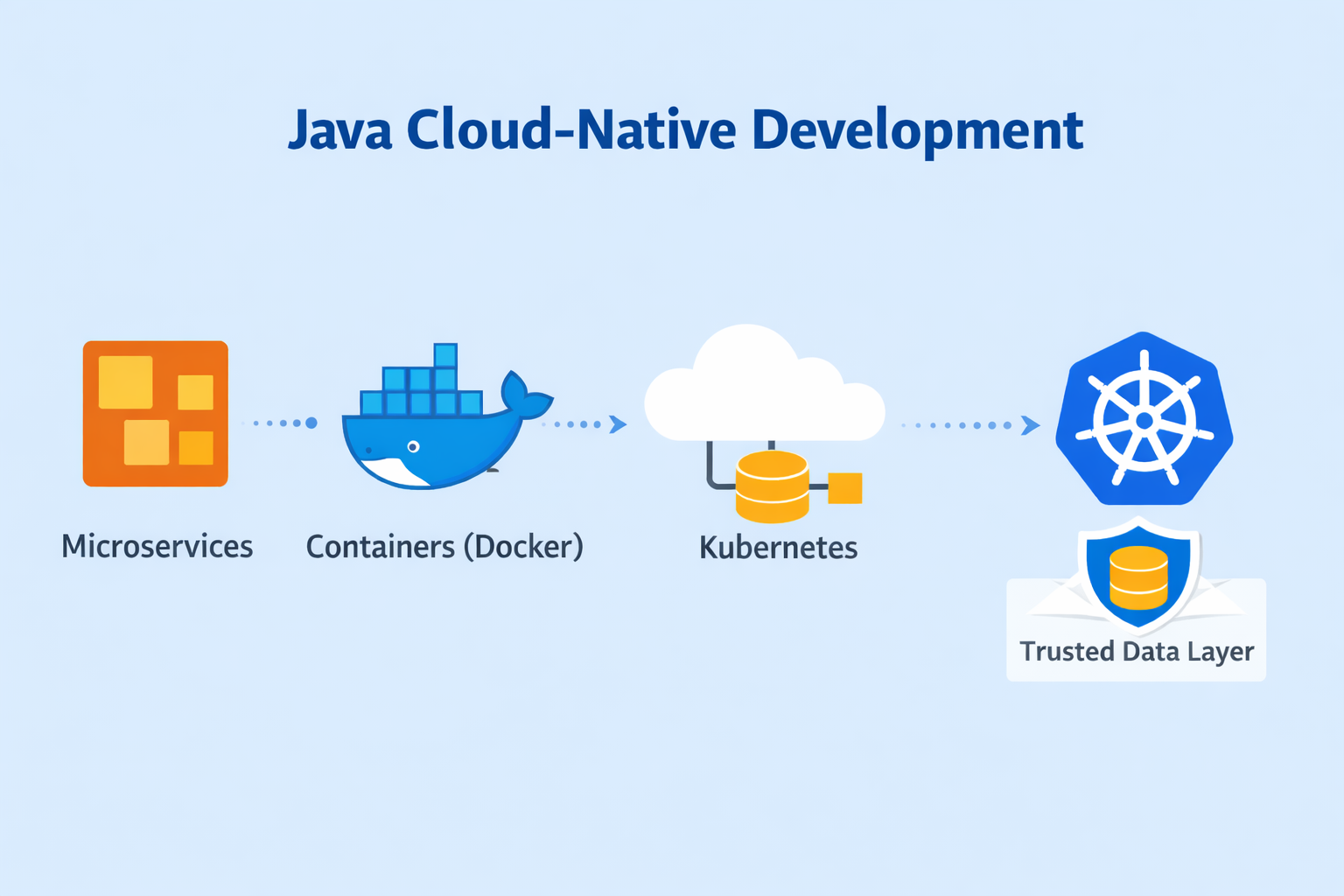
🔹 Microservices Architecture
Break your big app into small independent services 🧩. Each service does one job (e.g., login, payment).
🔹 Containers (Docker 🐳)
Package your app with all dependencies into a container—like a lunchbox 🍱. This makes it portable across environments.
🔹 Kubernetes ⚙️
If you have many containers, Kubernetes is the manager 👨💼 that organizes them, handles scaling, and ensures reliability.
🔹 Cloud Services ☁️
Instead of buying big servers, rent space in the cloud for storage, databases, and more.
How It Works
1️⃣ Build your app in Java using Spring Boot 🌱
2️⃣ Put it in a Docker container 🐳
3️⃣ Deploy it on Kubernetes ⚙️
4️⃣ Connect to cloud services ☁️ like databases and storage
5️⃣ Scale easily when more users join 📈
Benefits
✔ Runs anywhere (any cloud)
✔ Easy to scale 🔝
✔ Faster updates ⚡
✔ Reliable and secure 🔐